A catalog that understands flooring
Brand, collection, style, colorway and SKU — with the attributes that actually matter per product type, not a generic field you have to bend.


For floor covering manufacturers
Your specs live in a spreadsheet. Your images live on a shared drive. Your warranty PDFs live in someone's email. Inform Manufacturing holds one authoritative product record — specs, images, documents, pricing and inventory — and publishes it everywhere it needs to go. Update once. It lands everywhere.
What it replaces
Most small manufacturers run product data across a spreadsheet, a shared drive, the website CMS, the ERP, and whatever the marketing agency keeps on their side. Nothing is authoritative, so everything drifts — and you find out when a customer complains.
Built for how flooring actually works
Square yards, square feet, cartons and pallets. Private label programs that share a product but carry a different name. Generic product catalogs were not built for any of this. This one was.

Face weight · Twist · Dye lot · Roll width · Square yards
Wear layer · Edge profile · Core type · Cartons

Species · Janka · Cut · Board width · Run number

PEI · DCOF · Format · Finish · Pallets
Face weight and twist for carpet. Wear layer and edge profile for LVP. Janka and species for hardwood. PEI and DCOF for tile. The attributes that matter per product type — not a generic field you have to bend. How that works
Your data goes live in four steps
We map your existing spreadsheets, ERP or system exports into one catalog. No retyping.
The platform shows exactly which products are missing an image, a spec or a document.
Set up a channel per audience — dealer, agency, website provider, ERP — and it stays current.
Dealers check stock and place orders against the same data you just published.
Capabilities
Brand, collection, style, colorway and SKU — with the attributes that actually matter per product type, not a generic field you have to bend.
Upload once. Every dealer site and agency links to a stable URL and requests the size they need. Reshoot a style and every downstream site picks it up — without anyone editing a web page.
Install instructions, warranties and care guides, versioned and effective-dated. Years from now you can still produce the exact warranty that applied to a product on the day it sold.
A channel per audience, each with its own product scope and pricing. Dealers, agencies, website providers and ERPs each pull a feed that is always current — and you can see what was sent, to whom, and when.
Roll-level detail for soft goods, cartons and lots for hard goods. An embeddable widget puts live availability on your dealers' websites, with a visible “as of” stamp so nobody is guessing.
Dealers see their own pricing, check stock, place orders and track them through to shipment. Samples and literature use the same flow. Direct ship to the jobsite when that is what the job needs.
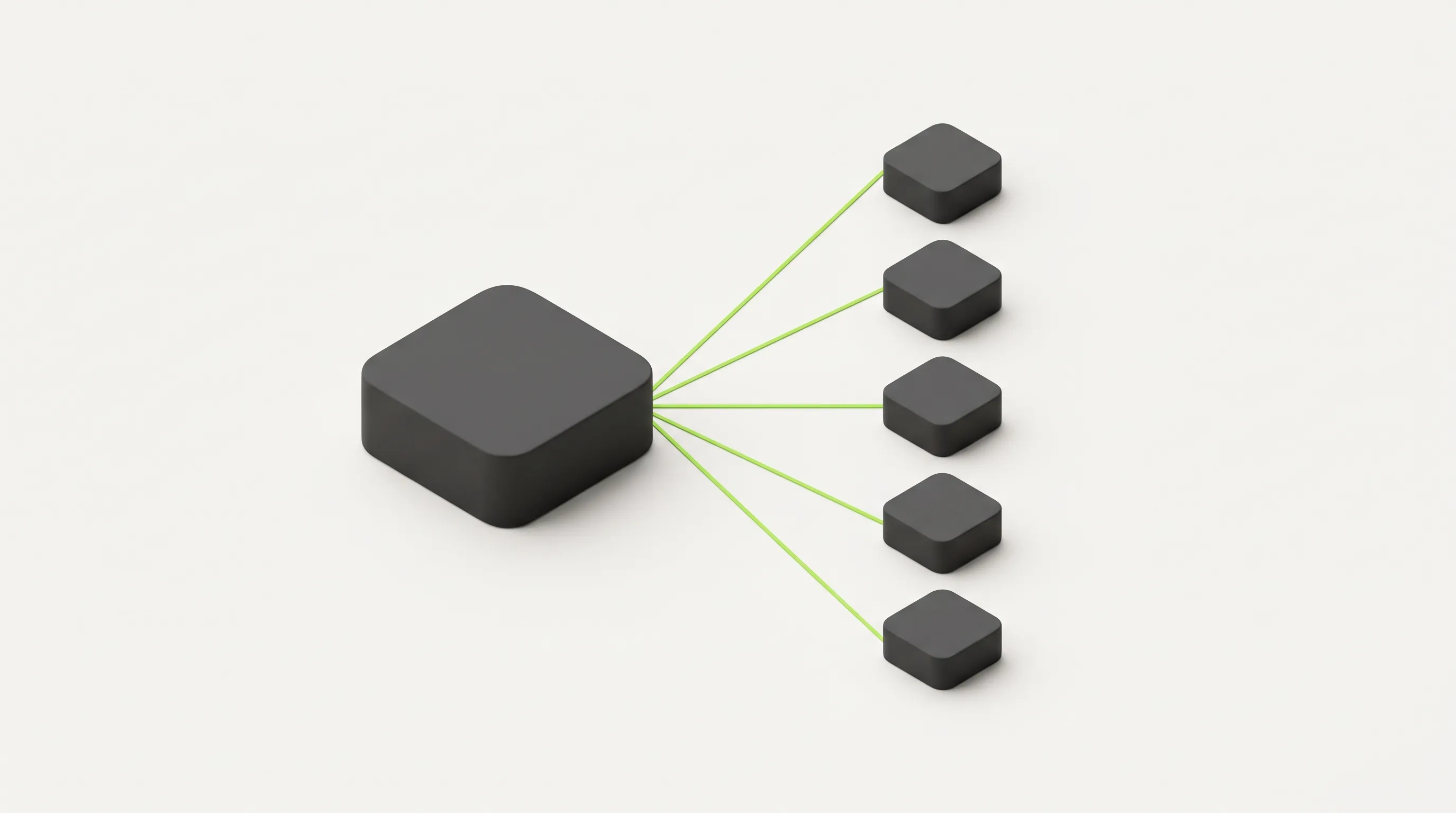
One record. A channel per audience — dealers, marketing agencies, website providers, ERPs — each pulling a feed that is always current. See the seven pillars

The installer feature nobody else has
Every style and SKU gets a permanent public page. Scan the code on the carton and the installer gets the current install instructions, care guide and warranty for that exact product — on a phone, on a jobsite, with no login.
Private label, without the duplication
Publish the same style under as many private-label brands as you supply. The construction, specifications and images are held once and shared. Brand names are applied to documents at the moment they are served — so a label change is a settings change, not a re-typesetting project.
Where a label genuinely differs — its own warranty terms, its own imagery — you override just that piece. Everything else stays shared.
A 30-minute walkthrough against your own product data. Bring a spreadsheet and a few warranty PDFs — that is enough to show you what changes.